Reflecting on the Design Process – Final Cut: A Media Lab Story


 Designing Final Cut: A Media Lab Story has been both challenging and rewarding. In this post, I want to reflect on what worked, what didn’t, and how I’ve grown as a designer while creating my first Twine prototype.


Reflecting on My Process


The process of designing the story began with my framing work: defining the intended audience (undergraduate media students), identifying the learning problem (teamwork and time management), and drafting a clear learning objective in Mager format. From there, I built out the story world — a film festival challenge with a week-long deadline — and characters that reflected common roles in a student crew.

What worked best was the decision mapping and story pyramid. Seeing the flow visually made it easier to balance narrative tension with educational goals. What didn’t work at first was the menu/navigation style — my early drafts were too linear. By testing in Twine, I saw how adding a meaningful early decision (the “battery crisis”) created the kind of branching structure I needed.

If I had to repeat this process, I would spend more time upfront planning how variables like morale, quality, and time could be tracked. Right now, they are just described in text but building them as actual stats in Twine would make the prototype more dynamic.


Learning to Use Twine

Working in Twine was a new but manageable challenge. I started with simple passages and links, then layered in story structure. What helped most was drafting the passages outside Twine in. twee format, then importing them directly — this saved time and kept everything organized.

The main limitation I faced was accessibility: Twine defaults to small text and low-contrast themes. I plan to adjust fonts, colors, and layouts in future versions to make the game easier for all learners to navigate.


Accessibility Concerns

If this prototype were taken into a full development cycle, I would want to address:

  • Adjustable text size and color contrast for readability.

  • Clearer navigation cues (e.g., icons or button styles instead of only text links).

  • Optional keyboard shortcuts for players with motor limitations.

These concerns are inspired by both my work in media labs and my reflections on accessibility from earlier assignments.


Reflecting on Peer and Guide Feedback

From my peers and gaming guide, I received encouragement about my framing and learning objective. Suggestions included making sure my decisions really tie back to teamwork (not just scheduling) and being mindful about how much text a player reads in one sitting. Both points are helping me revise for the next stage.


Documenting My Process

Here are links to my earlier blog posts that show the evolution of my project:

These practice activities were completed independently, without AI assistance. They demonstrate my ability to brainstorm, frame, and ideate on my own. AI support was used later to assist with drafting passages, formatting text, and generating concept art, which is cited in both my design document and prototype.

You can play my prototype here: Final Cut: A Media Lab Story "prototype" by Darthnihilious


Final Thoughts

This process reminded me that designing narrative games is iterative. Each step — framing, mapping, prototyping — added clarity and confidence to my design. By combining my own subject matter expertise with game design principles, I’ve started shaping a story that not only entertains but also teaches learners how to collaborate and manage projects under pressure.

Designing Final Cut: A Media Lab Story – Bringing Learning into Narrative

 As part of my work in Designing Games for Learning, I’ve been developing a narrative learning game inspired by my experience mentoring students in media production labs. This post documents the first phase of the design: framing, story building, and mapping decisions, which aim to teach teamwork and time management in a creative setting.


Framing the Game


[Placeholder image, not final]

My target audience is undergraduate students in media and communication courses, particularly those working on group video projects. These learners often underestimate how deadlines, limited resources, and interpersonal dynamics shape project success.

The learning topic is teamwork and project management in video production. The core problem is that new students may focus only on technical skills (cameras, editing software) and overlook planning, communication, and negotiation.

I drafted a learning objective in Mager format:

Given a simulated video-production scenario with limited resources, the learner will assign tasks and manage a small team to complete a short film, meeting at least 80% of project milestones without major conflict.

This framing helps keep the story aligned with measurable outcomes.


Building the Story

Proposed Title: Final Cut: A Media Lab Story

Setting & Point of View: The game takes place in a contemporary college media lab and nearby campus locations. The player acts as a student film director responsible for guiding a small team.

Characters:

  • Director (player) – balances quality, deadlines, and morale.

  • Cinematographer – talented but perfectionistic.

  • Editor – quick with software but prone to distraction.

  • Sound Technician – steady but anxious about equipment.

  • Actor – enthusiastic but juggling classwork.

Conflict: The crew has only one week to finish a short film for a festival submission. Obstacles include equipment failures, clashing schedules, creative disputes, and unexpected weather.

Plot Overview:

  • Beginning: The player assembles the crew and receives the brief for the festival project.

  • Middle: Challenges escalate—batteries die mid-shoot, an actor misses rehearsal, and a storm ruins outdoor scenes. The player chooses how to reallocate resources and keep morale high.

  • End: Outcomes vary. A well-managed crew submits a polished film on time. Poor management may lead to missed deadlines or a fractured team.


Decision Mapping and Design Lessons

I sketched an early branching map showing how decisions (e.g., reshooting a scene vs. editing around a mistake) feed into morale, schedule, and quality. The
se branches helped me align the story with my learning objective: to reward players for thoughtful planning and fair leadership rather than just technical perfection.

Insights from the games I analyzed shaped these mechanics:

  • From Egypt: Old Kingdom, I borrowed the idea of systems thinking—resources, time, and morale act as interconnected variables.

  • From Spent, I learned how small, high-stakes prompts can make players empathize with pressures behind each decision.

  • From Gods Will Be Watching, I adopted the concept of moral trade-offs: sometimes every option carries risk, which mirrors real creative teamwork.

[Early decision map sketch for Final Cut. Subject to change]


Decision Types and Emotions

The primary decision types in Final Cut are resource allocation and trade-off/moral choices. Players decide how to spend time, who to push or support, and when to compromise on artistic vision to meet the deadline.

I want players to experience a mix of urgency, empathy, and satisfaction—the tension of a ticking clock balanced with pride when a well-coordinated team crosses the finish line.


Next Steps

My next milestone is to prototype a simple scene in Twine. I’ll start with one branch of the story (an equipment crisis mid-shoot) and experiment with how different responses affect time, morale, and final quality.

As I refine the game, I’ll continue blogging progress so classmates and peers can give feedback on how well the story supports the learning objective. My hope is that Final Cut: A Media Lab Story will encourage students to see collaboration and planning as just as vital as camera skills or editing tricks.

Check out my earlier post comparing narrative elements in the games that inspired this design: [The Quest Log: Gaming for Learning & Fun: Comparing Narrative Elements in Games: Lessons for Learning Design]

Comparing Narrative Elements in Games: Lessons for Learning Design


 As I work toward designing my own narrative learning game, I’ve been exploring how different games tell stories and teach through their mechanics. For this round, I focused on my mentor game, Egypt: Old Kingdom, and two shorter titles: Spent and Gods Will Be Watching. All three approach narrative in unique ways, and looking at them side by side helped me understand how interactive stories can support meaningful learning.


Egypt: Old Kingdom – History Through Systems

My mentor game is a historical strategy sim where you guide Egypt from small tribes to a thriving kingdom. Its narrative doesn’t unfold through cutscenes or dialogue; instead, it emerges from systems and events. Famine, flood cycles, and technological advances appear as choices and consequences that shape your kingdom’s fate.

Playing for several hours, I noticed how the story of Egypt’s growth is told through each decision: where to build, when to expand, and how to balance religion, culture, and survival. I felt immersed not just as a player, but as a pharaoh responsible for a people. That perspective aligned perfectly with my course readings on how games can create identity and agency for learners.


Spent – Building Empathy Through Hard Choices

Spent is a very different experience. It’s a simple, browser-based game that gives you $1,000 and challenges you to survive one month while paying bills, buying food, and making difficult personal choices. Every decision—skipping a doctor visit, taking a risky job, or denying your child a treat—hits hard because you see its immediate consequences.

The narrative is minimal, delivered as text prompts, but the emotional impact is strong. I finished my first run with less than $50 left, and it felt like a gut punch. The game succeeds because it teaches empathy: it lets you feel a fraction of the stress faced by people living on the edge of poverty.


Gods Will Be Watching – Dilemmas and Tension

Gods Will Be Watching sits somewhere between the other two games. It’s a
minimalist point-and-click adventure where each chapter places you in extreme situations—negotiating with hostages, rationing supplies, surviving torture. Success depends on balancing survival, ethics, and time pressure.

I appreciated how the game used moral dilemmas to keep me engaged. In one scenario, I had to decide whether to give precious rations to a sick teammate or save them for the group. The tension was palpable because there wasn’t a single “right” answer. That feeling connects to what my coursework calls “productive failure”: struggling through complex choices to build understanding.


[Insert Figure 3: Screenshot of a survival scene in Gods Will Be Watching]


Cross-Comparison and Accessibility

Looking across these titles, I found three narrative elements present in all of them:

  1. Player agency – The ability to make meaningful decisions.

  2. Conflict – A challenge or problem that drives the story forward.

  3. Consequences – Feedback that reinforces the stakes of each choice.

Yet their methods differ. Egypt builds narrative through systemic growth, Spent uses sharp life events, and Gods Will Be Watching thrives on moral ambiguity.

Accessibility also varied. Spent scored highest in my Level 1 metric: it’s web-based, clear, and can be played with just a mouse. Egypt offers adjustable text but is more complex. Gods is the least accessible because of small text and strict timers, which could make it hard for players with low vision or motor challenges.


Lessons for My Game Design

Studying these games taught me that narrative learning doesn’t require walls of text. Story can emerge through mechanics, stakes, and feedback. For my own project—currently titled Final Cut: A Media Lab Story—I want to combine the agency and systems of Egypt, the empathy of Spent, and the decision tension of Gods Will Be Watching.

My goal is to create a short simulation where students direct a small film crew, balancing time, resources, and morale to finish a project before a deadline. Seeing how these games use narrative to teach made me more confident that learning and storytelling can be seamlessly woven together.

Read more about my developing project here: [The Quest Log: Gaming for Learning & Fun: Designing Final Cut: A Media Lab Story – Bringing Learning into Narrative]

Gamestorming and Narrative Learning Game Design


Process of Gamestorming & Story Design

Joseph Sabo. (2025). Image of a college media production team. Made using Adobe Photoshop.


In this practice, I worked through a series of gamestorming and ideation techniques to design the beginnings of a narrative game for learning. My process involved brainstorming possible topics, narrowing them down by relevance and feasibility, and then framing them within a story that could carry clear learning objectives.

What worked best was freely brainstorming scenarios based on real challenges I have seen in digital media labs, such as equipment shortages, group conflicts, and unexpected technical problems. These gave me a strong foundation for building a story with authentic tension. What didn’t work as well was when I tried to design game mechanics before solidifying the story. This made the design feel forced until I refocused on narrative first.

If I had to repeat this process, I would start with “framing” earlier — clarifying audience, subject matter, and learning objectives before diving into details. That would have made the ideation stage smoother and more focused.


Understanding Narrative Games

In the first week, I explored narrative games such as Egypt: Old Kingdom (my mentor game) and two additional games, Spent and Gods Will Be Watching. These experiences helped me understand how narrative games can teach through different forms of tension.

  • Egypt: Old Kingdom used resource management and historical systems to teach through complexity and perspective-taking. I had to balance food, population, and culture, stepping into the role of an Egyptian ruler.

  • Spent relied on real-world empathy, placing me in the shoes of someone trying to survive a month on limited income. Every choice carried weight, and success often meant sacrificing something important.

  • Gods Will Be Watching emphasized moral dilemmas with no perfect outcomes. Hostage negotiations or survival scenarios left me questioning what “success” even meant.

Comparing the three, I found that my mentor game focused on systems and long-term decisions, while the two shorter games pushed more immediate and emotional responses. This contrast showed me how narrative games can vary widely in structure and impact, from historically grounded systems to bite-sized empathy experiences.

Screenshot of a humorous gaming meme titled ‘I Should Go’”. Posted by u/[, 2019.


Framing My Narrative Learning Game

Audience: My intended audience is undergraduate students in media/communication courses, especially those working on group projects in digital media or film production.

Subject Matter: The game will focus on teamwork, communication, and problem-solving in the context of completing a media production project.

Learning Objective (Mager Format):
Given a media production scenario with limited time and resources, the learner will allocate tasks among a small team to successfully complete a short video project, with at least 80% of deadlines met and minimal conflict among teammates.

Problem Leading to Topic: In my experience, students working on creative projects often struggle with time management, resource allocation, and team communication. These problems can derail projects and cause frustration. A narrative game simulating this environment could help learners practice these skills in a low-stakes, interactive way.


Results of Ideation Exploration

In my ideation phase, I brainstormed multiple possibilities, including simulations of client negotiations, classroom management, and historical storytelling. What worked best for developing ideas was starting with challenges I had personally experienced or observed. These gave me an authentic base for narrative conflict.

When I went back to align ideas with my framing, I realized some of my early ideas were too broad or didn’t connect directly to teamwork. Narrowing the scope to a single week-long student film project made the story more manageable and aligned tightly with my learning objective.

The idea I decided to start with was a media production teamwork narrative game that challenges players to balance resources, personalities, and deadlines to complete a project.


My Story Idea

Summary:

  • Conflict: A student film crew has one week to finish a short video project for a festival submission, but equipment shortages, personality clashes, and unexpected challenges (like weather changes or lost footage) create barriers.

  • Game Goal: Successfully complete and submit the project while keeping the team motivated and meeting deadlines.

  • Major Elements:

    • Characters: Director (the player), Cinematographer, Editor, Sound Tech, Actor.

    • Settings: Editing lab, studio, outdoor shoot locations.

    • Events: Equipment failure, actor dropping out, disagreements over creative vision, tight deadlines.

Intended Emotions: I want players to feel urgency (time pressure), empathy (understanding teammates’ struggles), and satisfaction when the project comes together despite obstacles.

Decision Types (Hiwiller):

  • Resource Allocation Decisions → balancing time and equipment use.

  • Moral Choices → pushing a stressed teammate vs. letting them rest.

  • Trade-off Decisions → cutting scenes to meet deadlines.

These decision types connect directly to the game’s learning goal because teamwork in production always requires prioritization and compromise.


Self-Check & Practice Reflections

Through this exercise, I learned that defining learning content requires balancing ambition with feasibility. Ideation worked best when I generated a wide range of ideas first and only narrowed them later. If I had to repeat the process, I would build the framing details sooner, so I could filter ideas more efficiently.

The story idea I developed is just the starting point, but it shows me how narrative structure, decision-making, and emotions can combine to support learning. Comparing my mentor game with Spent and Gods Will Be Watching helped me see how very different narrative strategies (historical systems, empathy, moral dilemmas) all lead to meaningful learning. My own design aims to blend those lessons into a grounded, real-world context: a narrative learning game that challenges players to succeed through teamwork under pressure.

📚 References (APA 7)

Clarus Victoria. (2018). Egypt: Old Kingdom [Video game]. Clarus Victoria. https://store.steampowered.com/app/646570/Egypt_Old_Kingdom/

Deconstructeam. (2014). Gods Will Be Watching [Video game]. Deconstructeam. https://www.deconstructeam.com/games/gods-will-be-watching/

McKinney & Urban Ministries of Durham. (2011). Spent [Browser game]. Playspent.org. https://playspent.org/

Gee, J. P. (2007). What video games have to teach us about learning and literacy (2nd ed.). Palgrave Macmillan.

Hiwiller, J. (2016). Players making decisions: Game design essentials and the art of understanding your players. CRC Press.

u/arikX5. (2019). I Should Go [Reddit post]. Reddit. https://www.reddit.com/r/gaming/comments/fktz3l/i_should_go/

Surviving Hard Choices: Playing Spent and Gods Will Be Watching

 Introduction

For this assignment, I explored two very different games: Spent (by McKinney & Urban Ministries of Durham) and Gods Will Be Watching (by Deconstructeam). I played each game for around thirty minutes, and both experiences forced me to make tough decisions under pressure, but in very different ways.


🟨 Game 1: Spent

Spent places you in the role of someone living on a limited budget with only $1,000 to survive an entire month. Every choice matters — from whether to pay a medical bill, to skipping a meal, to taking on extra work.

Gameplay Experience:
I tried to balance caring for my family, keeping my car legal, and covering surprise costs while stretching every dollar. I chose affordable groceries, thrift-store shoes, and often skipped extras like babysitters or lottery pools. I helped my mom get her medication and fought a speeding ticket in court to save money. Still, medical bills, pet care, car repairs, and a late-month accident steadily chipped away at my balance. By Day 27, a $550 car-damage bill wiped out my last savings, leaving me with $0 before the month ended.

Reflections:
What struck me most was how quickly my money disappeared, even when I tried to make careful decisions. The game highlights the reality that “good choices” are not always available when resources are scarce. I found myself empathizing with people who face these struggles daily, realizing how stressful it is to constantly juggle needs and risks.


🟨 Game 2: Gods Will Be Watching


Gods Will Be Watching
is a minimalist survival game that throws you into morally complex scenarios, such as hostage negotiations or surviving with limited supplies. Unlike Spent, which feels grounded in everyday life, this game creates pressure through extreme, life-or-death stakes.

Gameplay Experience:
I started with the opening hostage-negotiation scenario, and it immediately pulled me into a tense balancing act. I had to advance the hack while keeping hostages calm and the guards at bay. One misjudged warning shot sent panic through the room, and I nearly lost control before finishing the hack just in time. Later chapters only raised the stakes: rationing antidotes in a frozen cave and trying to keep morale high on a hostile planet. Each success felt precarious, as though one wrong choice could doom everyone.

Reflections:
The game was deliberately stressful. Many of the decisions had no “right” answer, and sometimes I felt like failure was inevitable. While frustrating, this design forces players to reflect on sacrifice, leadership, and the moral weight of their choices.


🔍 Comparison & Takeaways

Playing both games back-to-back revealed how games can teach through different kinds of pressure. Spent is simple, direct, and emotionally impactful because it relates to real-world poverty. Gods Will Be Watching is more abstract but pushes players to think about ethics and survival in extreme situations.

In terms of learning, I think Spent is more accessible for a wide audience and directly tied to social awareness. Gods Will Be Watching demands patience and reflection but is powerful for exploring moral ambiguity. Together, they demonstrate the range of what games can do — from raising empathy to testing values.

Citations:

Deconstructeam, & Devolver Digital. (2014). Gods Will Be Watching [Video game]. Deconstructeam; Devolver Digital.

McKinney, & Urban Ministries of Durham. (2011). Spent [Browser game]. https://playspent.org/


Egypt: Old Kingdom – Mentor Game Critique

Introduction

The purpose of this post is to critically examine Egypt: Old Kingdom as a mentor game for the Designing Games for Learning course. This analysis will address the game’s core details, my personal gameplay experience, its accessibility, and its alignment with James Paul Gee’s Principles of Learning. Additionally, I will evaluate how the game could be applied in educational settings and reflect on the process of conducting a structured critique.

Egypt: Old Kingdom is a historical strategy game that combines resource management with decision-making and historical storytelling. While primarily marketed as entertainment, it provides opportunities for developing systems thinking, understanding resource constraints, and considering how civilizations adapt to challenges. This critique aims to evaluate the game’s educational value alongside its limitations.

There were a couple of reasons I selected Egypt: Old Kingdom. When I was an undergraduate student at Webster University, I took a history class on Ancient Egypt, where I learned more about the culture and even made a valiant attempt at deciphering hieroglyphics. Regardless, many ancient cultures have unique characteristics, from their architecture and art to their ways of life. Ancient Egypt was no exception, and references to it are still plentiful today in popular media and scholarship. Choosing this game as my mentor game allows me to revisit that earlier interest while also exploring how a strategy game can be used as a learning tool for understanding historical systems and decision-making.

Mentor Game Details

The mentor game selected for this semester is Egypt: Old Kingdom, developed by Clarus Victoria, a studio known for creating historically inspired strategy titles. The target audience for the game includes history enthusiasts, strategy gamers, and educators who may want to introduce learners to ancient civilizations through interactive means.

The learning focus of the game lies in understanding how early Egyptian society developed along the Nile. Players must balance resource management, population growth, environmental stability, and religious authority to sustain and expand their kingdom. While the game does not provide a direct curriculum, it embeds historical knowledge within its mechanics and narrative choices.

Gameplay is primarily turn-based. Players assign workers, collect resources, develop technologies, and expand territory across a map of the Nile Valley. Over time, players unlock monuments, cultural institutions, and military campaigns. The ultimate goal is to grow Egypt from a tribal settlement into a powerful and stable kingdom while surviving recurring crises such as famines and invasions.

The narrative is lightly structured, drawing on Egyptian mythology and semi-historical leaders. The game is designed for single-player, with rules emphasizing strategic allocation of limited resources. Success depends on careful planning and adapting to new challenges introduced over time.

Clarus Victoria does not provide formal lesson plans or teacher resources with the game. However, the game’s Steam page and website highlight its use of Egyptological research and references to historical periods. Educators could adapt the mechanics to lesson plans, but currently, no official teaching resources are provided.

While I did not delve deeply into it during this initial playthrough, I noticed an area in the Main Menu where players can take quizzes on Ancient Egypt, separate from the RTS portion of Egypt: Old Kingdom. I thought this was a clever addition, as it provides an opportunity for players to test their knowledge of the subject matter outside of the core gameplay. Although the quizzes are not fully integrated into the main experience, they demonstrate an intentional effort by the developers to connect the game with more traditional forms of assessment, which could be useful in an educational context. 

Figure 1. Screenshot of Quiz mode in Egypt: Old Kingdom (Sabo, 2025).

Gameplay Experience

I have played Egypt: Old Kingdom for approximately two hours, spread across multiple sessions. During this time, I completed the initial tutorial stages and progressed to building key cultural and agricultural developments along the Nile. Accomplishments included establishing sustainable food production, constructing monuments, and managing tribal unification.

One of the primary struggles I faced was balancing expansion with resource stability. Rapidly increasing the population often led to shortages of food or stone, which created pressure to rethink my strategy. This challenge made the game engaging, as mistakes had meaningful consequences.


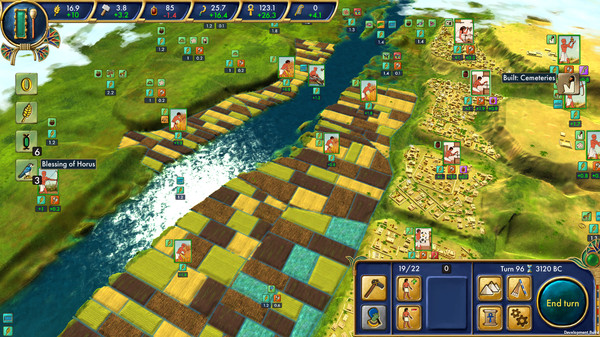
Figure 2. Screenshot of early gameplay in Egypt: Old Kingdom (Sabo, 2025).

Learning was well embedded in the game’s mechanics. While playing, I gained insight into the importance of the Nile flood cycles, agricultural surplus, and the relationship between religion and governance in ancient Egypt. These concepts were introduced through in-game events and decision-making prompts rather than external readings.

Reviews and commentary from other players suggest similar experiences: many praised the game’s historical depth but noted the steep learning curve. A Steam user echoed my experience, noting:

“As a simulation of the history of Old Kingdom Egypt, you would be hard-pushed to find a game with as much detail and accuracy while still being engaging ... the player is put in the position of an Egyptian ruler themselves.”

Steam Community


This supports my observation about how the game’s mechanics—like crisis response and resource balancing—help players step into the role of leadership, reinforcing the identity and system-thinking principles discussed earlier. My own experience aligns with these impressions, though I found the tutorial adequate for getting started.

In terms of improvements, the game could include a dedicated “educational mode” with clearer connections to historical concepts. A guided scenario that aligns with a classroom lesson would make it more accessible for learners who are unfamiliar with strategy games.

I also feel like the Main Menu, or at least the menu for selecting the game’s difficulties, could be improved. From an artistic perspective, I understand the intent of presenting the difficulty levels as Egyptian paintings and arranging them in a thematic lineup. However, this design choice made navigation slightly confusing at first, since it was not immediately clear which option corresponded to which difficulty. Granted, these were only my initial playthroughs, so I do not want to sound overly critical, but it was noticeable. A similar challenge arose with some in-game menus, such as the technology research screen. Instead of the more common vertical scrolling format, the menu requires horizontal scrolling, which briefly disoriented me when trying to make selections. While these design elements fit the game’s aesthetic, they could present barriers for players who are accustomed to more standardized interface layouts


                        Figure 3. Screenshot of gameplay setting menu for a new game in Egypt: Old Kingdom (Sabo, 2025).

Games for All: Accessibility Assessment

From an accessibility perspective, Egypt: Old Kingdom presents several barriers. The interface is heavily text-based, with small fonts that may be difficult for players with visual impairments. There is no voice narration or screen reader support, which limits accessibility for players with low vision or reading disabilities. The game also assumes a level of comfort with complex strategy mechanics, which may exclude younger or novice players.

Based on the WSSG Accessibility heuristic scale, I would rate the game moderate to low in accessibility. While it does not completely prevent play for most users, the lack of options such as scalable text, colorblind modes, or audio narration creates obstacles. Improvements such as customizable UI, clearer tutorials, and alternative input methods would help broaden its accessibility.

Outside of the Accessibility Scale, there is also the broader question of how people with physical disabilities play video games. For professional reasons, I will not name them here, but I personally know a few individuals who either lost an arm or whose arm never fully developed. Growing up, we always found ways to include them in our gameplay sessions, but at the time I never truly recognized how difficult it could be to play a game that I often took for granted. My perspective shifted when I was temporarily in a sling for a week and tried to play Halo 2, which in hindsight was not the best choice. That experience gave me a new appreciation for the barriers my friends faced.

This memory resurfaced recently when I met one of our new hires at the Digital Media Lab in Ellis Library, who also lives with the loss of an arm. In light of that, I was pleased to find that Egypt: Old Kingdom can be played entirely with just a mouse, which makes it somewhat more accessible to players with limited mobility. That said, like many RTS games, it also includes keyboard shortcuts that, while helpful for speeding up commands, could present additional barriers for someone with a physical disability.

Overall, while the game shows some promise in terms of basic accessibility, especially for players who rely on mouse-only controls, there remain clear opportunities for improvement. These limitations highlight why accessibility must be considered alongside the core design of a game, not as an afterthought, which connects directly to broader discussions of how learning principles are (or are not) embedded in gameplay design

Principles of Learning Critique

Using Gee’s framework, Egypt: Old Kingdom demonstrates several principles of learning.

Empowering Learners:
- Co-Design Principle: The player actively shapes the development of Egypt through choices about expansion, technology, and resource allocation. These decisions impact the course of history, giving the player significant agency.
- Identity Principle: The player adopts the role of pharaoh or tribal leader, taking on decisions as if they were responsible for the welfare of an entire civilization. This identity immersion encourages perspective-taking and role-based learning.

Problem-Based Learning:
- Regime of Competence Principle: Challenges gradually increase in difficulty. Early stages involve balancing food, while later scenarios demand complex trade-offs between military, culture, and religion. This progression matches the player’s growing competence.
- Cycles of Expertise Principle: Repeated encounters with Nile flood cycles and resource scarcity force players to practice, fail, and adapt strategies. Over time, these cycles develop expertise in managing complex systems.

Deep Understanding:
- System Thinking Principle: The game highlights how interconnected systems (environment, economy, religion, and politics) influence one another. For example, neglecting agriculture during monument building may lead to famine, demonstrating the trade-offs inherent in societal development.

In summary, Egypt: Old Kingdom demonstrates several of Gee’s learning principles, particularly in its emphasis on problem-solving, role identity, and systems thinking. While not designed specifically as an educational tool, the game’s mechanics naturally encourage these forms of learning, which makes it an intriguing candidate for classroom integration when paired with supporting materials

Applications for Learning

Based on my analysis, Egypt: Old Kingdom could be a valuable supplement in history or social studies classrooms. Teachers could assign short play sessions, followed by reflective writing prompts such as: “How did your decision to expand too quickly affect your people?” or “What role did the Nile floods play in your survival?”


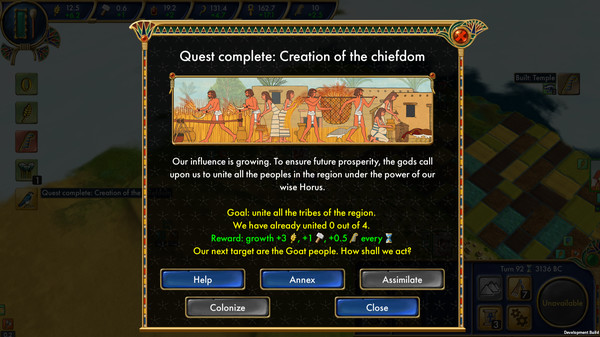
      Figure 4. Screenshot of gameplay meeting a new tribe in Egypt: Old Kingdom (Sabo, 2025).

Improvements that could assist educators include built-in lesson plans, guided scenarios, or historical commentary that connects gameplay events to real-world history. This would help bridge the gap between entertainment and structured learning.

Reflection on the Critique Process

Through this critique, I learned how to analyze a game not only as entertainment but also as a potential educational tool. I recognized the importance of accessibility, the value of connecting gameplay mechanics to learning principles, and the need to consider teacher support materials.

If I were to redo this critique, I would dedicate more time to systematically tracking my in-game decisions and their outcomes to provide stronger evidence. The most interesting part of the analysis was identifying how Gee’s principles of learning were naturally present in the game’s mechanics, even though it was not explicitly designed as a classroom tool.

In the end, analyzing Egypt: Old Kingdom as my mentor game has been both an academic and a personal journey. My earlier exposure to Ancient Egyptian culture in college sparked an interest that this game allowed me to revisit, but this time through the lens of instructional design. By examining its mechanics, accessibility, and alignment with learning principles, I was able to see firsthand how a commercial strategy game can contain meaningful opportunities for learning. More importantly, the process of critique reminded me that games are not just entertainment; they are complex systems that can model history, challenge assumptions, and promote problem-solving. As I continue through this course, I hope to carry forward the lessons I learned here: to approach games critically, to value accessibility and inclusivity, and to recognize the potential of games as powerful tools for learning.

References

Clarus Victoria. (2018). Egypt: Old Kingdom [Video game]. Clarus Victoria. https://store.steampowered.com/app/646570/Egypt_Old_Kingdom/

Gee, J. P. (2007). What video games have to teach us about learning and literacy (2nd ed.). Palgrave Macmillan.

Steam user. (2018, December 28). Review of Egypt: Old Kingdom [Review of the game Egypt: Old Kingdom]. Steam. https://store.steampowered.com/app/646500/Egypt_Old_Kingdom/?utm_source=chatgpt.com

Sabo, J. (2025). Egypt: Old Kingdom gameplay screenshots [Screenshots]. Personal collection.

“From Sand to Strategy: First Impressions of Egypt: Old Kingdom”

 Welcome to *The Quest Log*!


As part of Level 1 in my Designing Games for Learning class, I completed a **Game Critique Practice** and then began my journey into my mentor game: **Egypt: Old Kingdom**. Here's how that experience translated from critique to reflection:


---


## 🎮 Game Critique Practice: What Makes a Game Great for Learning?


As part of the Level 1 task, I analyzed key components that contribute to an effective educational game. I focused on:

- **Challenge vs. Skill balance** (Flow)

- **Meaningful learning mechanics**

- **Narrative engagement**

- **Player autonomy**


In that critique, I learned that the most effective educational games integrate learning goals into the *gameplay itself*, rather than treating them like passive lessons or pop quizzes. They let you learn *by doing*, not just watching.


---


## 🏛 Mentor Game Reflection: Egypt: Old Kingdom


Starting my mentor game, **Egypt: Old Kingdom**, I immediately noticed it aligned well with what I wrote in the practice critique.


- **Game Mechanics = Learning:** The game teaches historical progression through resource management and tough decision-making. You're not just *reading* history — you’re *living it*.

- **Narrative & Systems Thinking:** You take on the role of a ruler guiding Egypt’s development. The cause-and-effect chains are complex and reward long-term thinking.

- **My Player Type:** According to my Player Profile, I’m part Strategist and Explorer. This game fits me well — there's a lot of systems-based strategy and historical discovery.


---


## 💬 What I’m Wondering


While the game is incredibly immersive, I’m still curious about how it fits into more **constructivist learning models**. Is the game just simulation, or is it encouraging critical thinking and reflection?


This is a quest I’ll be exploring further.


🎮 Final Reflection: Closing the Questline

  Quest Log Entry — Prototyper’s End-of-Semester Reflection What a semester this has been. If I flip back through the pages of my Quest Lo...